threads of freeorder, leif smith, editor — Subscribe
Each separate month of Threads: leifsmith.substack.com
 
3 pm 22 Sep 2026 (draft) - threads of freeorder
 
*
<graphic>
V
note on the graphic (if needed)
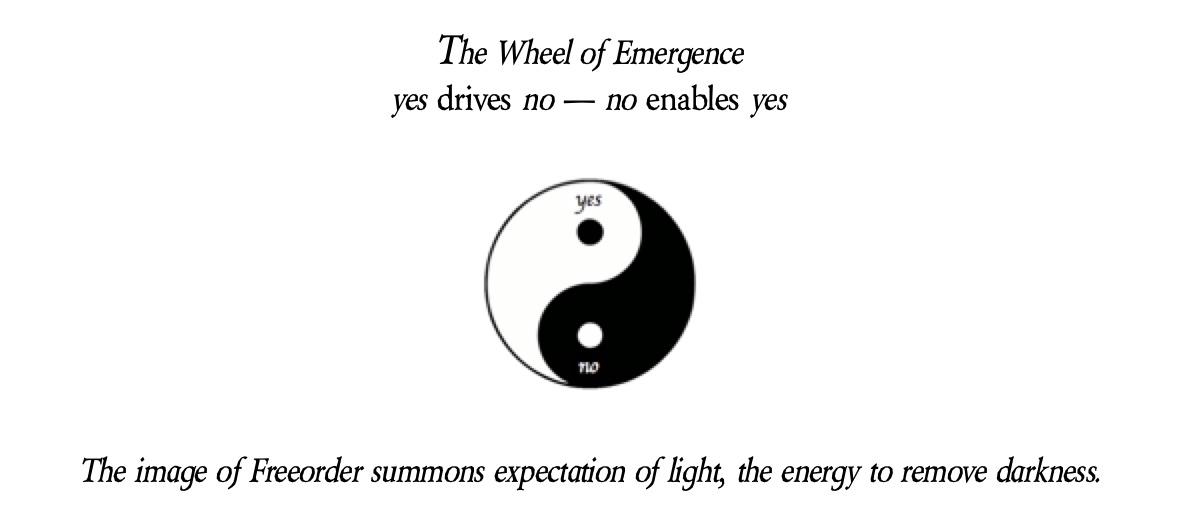
🌱 freeorder (process) —> Freeorder (outcomes)
 
This substack is becoming notes on conversations — that’s why the draft of the coming issue is always made available. If you have not emailed me before (and gotten a reply) please use this address: leifsmith+1@gmail.com — to circumvent spam guards :-) — or txt 720-891-7308
 
V
Added:
*
22nd: Richard Ebeling’s new book on history of economics
*
19th: Irvin Studin is to be inducted into the Legion of Misinformers.
*
19th: Patrick Boyle’s account of a theological error committed by AI agents
*
[] Lei’s Real Talk
*
18th: More on Peter Saint-Andre’s translation of Aristotle
*
16th: Waldstein, age 30, to Beethoven, age 22
*
14th: Interview with Walter Russell Mead
*
14th: “AI Kills Everybody or Doomer Psyop?” •••
*
12th: “Dynamics with Expectations” by Natalie Sandrine Glance, 1993
*
9th: Ajeya Cotra on the AI, Hugging Face, escape & attack
*
Since 4th: “Theo Baker” “Stanford” “Money” “Tech”
*
 
V
Notes to readers of this draft
*
Diverse things appear here as fuel for discussion, but many of them may be removed before publishing a final version at the end of each month.
*
Many of the things in “Threads” have a connection with something being done by at least one participant in this ∮forge.
*
“xxx” is a placeholder for a link
*
 
*
~~~~~ Three Books & And Two Interviews ~~~~~
*
 
*
The Spirits of America xxx by Jeffrey Tucker
*
 
*
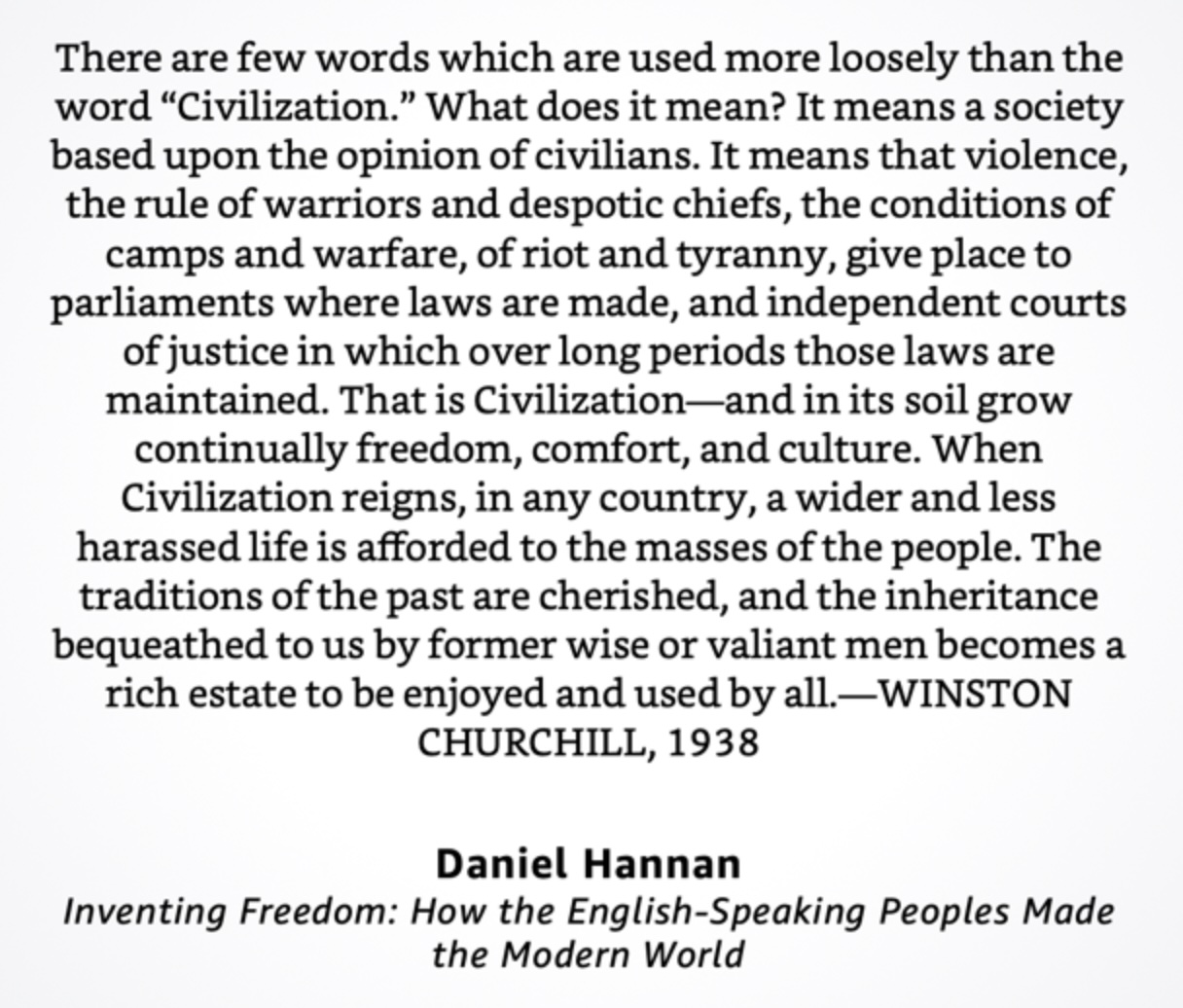
How We Invented Freedom & Why It Matters xxx by Daniel Hannan
*
 
V
Born of Ideas: How Principles, Faith, and Courage Forged America xxx by Lawrence W. Reed
*
[] xxx Reader’s recommendations, as published in the book
*
 
V
Jeffrey Tucker, interviewed xxx by James Howard Kunstler
*
 
V
“Why the World Order Is Collapsing and American Power Is Rising” ••• Walter Russell Mead is interviewed by Patrick O'Shaughnessy ••• the CEO of Positive Sum •••
V
Following Patrick leads to Colossus Magazine which leads to this article by xxx on Guo’s investments in AI firms •••
*
‘“The future I want,” Guo told me, “is not a single company with an all-powerful model that consumes society faster than we know what to do with.”
*
‘It is a feeling increasingly shared. The labs raised the price of tokens this year, in some cases a hundredfold, and their customers have begun to revolt. They do not want to build on another company’s model—paying it, feeding it their data, training it, in effect, to one day build the thing they have built. Alex Karp, the chief executive of Palantir, went on CNBC and described his enterprise clients as livid. “The jig is up,” he said. A founder in Guo’s own portfolio put it more plainly. He didn’t want to spend his life drinking Anthropic and OpenAI’s water.
Guo has become a de facto leader of the insurgency.’
*
 
*
 
V
Eudemian Ethics
*
Glossary - important
*
Work so far
*
 
V
I understand that Irvin Studin is to be inducted into the Legion of Misinformers in recognition of his recent article in the Toronto Sun. In his Focal Points Peter McCullough writes:
*
‘The author is very credible. Irvin Studin is the president of The Institute for 21st Century Questions and editor-in-chief of Global Brief magazine. He was nominated for the 2025 Nobel Peace Prize for his work on the pandemic-era education catastrophe. This is a man with institutional standing writing in a mass-market daily, and he is saying out loud what the Canadian establishment has spent five years insisting is a conspiracy theory.’ https://www.thefocalpoints.com/p/breaking-toronto-sun-capitulates
*
STUDIN: Allison Inquiry must now lead to resignations and full public inquiry
Biggest health policy mistake in Canadian history at best, or crime against humanity at worst — https://torontosun.com/opinion/columnists/allison-inquiry-resignations-public-inquiry
*
 
V
Richard Ebeling’s Liberty and the History of Economic Ideas: From the Ancients to the Austrian Economists, published in 2026
V
Recognition of early Chinese understanding of spontaneous order
*
‘Furthermore, a system of economic liberty does not need the commanding and controlling hand of government to ensure that the means to fulfil peoples’ needs and wants are produced and supplied. While the idea of a “spontaneous,” self-coordinating economic system is often identified with the eighteenth-century French Physiocrats and Scottish philosophers, such as David Hume and Adam Smith, it was already understood and articulated over two thousand years ago by the famous ancient Chinese historian, Ssu-ma Ch’ien (145–90 BC) in his Records of the Historian, where he writes that Society obviously must have farmers before it can eat; foresters, fishermen, miners, etc., before it can make use of natural resources; craftsmen before it can have manufactured goods; and merchants before they can be distributed. But once they exist, what need is there for government directives, mobilizations of labor, or periodic assemblies? Each man has only to be left to utilize his own abilities and exert his strength to obtain what he wishes. Thus, when a commodity is very cheap, it invites a rise in price; when it is very expensive, it invites a reduction. When each person works away at his own occupation and delights in his own business then, like water flowing downward, goods will naturally flow forth ceaselessly day and night without having been summoned and the people will produce commodities without having been asked. Does this not tally with reason? Is it not a natural result?’
*
 
*
~~~~~~~~~~
V
In 1792 Count Waldstein, of Bonn, ‘… arranged a scholarship for Beethoven to visit Vienna, and in a famous passage written in November 1792, he bids the composer farewell •••
*
’Dear Beethoven! You go to realize a long-desired wish: the genius of Mozart is still in mourning and weeps for the death of its disciple… By incessant application, receive Mozart’s spirit from Haydn’s hands.’ Waldstein was eight years older than Beethoven.
*
 
V
How Beethoven’s Egmont Overture: became the musical anthem for the Hungarian Revolution, 1956.
*
Jan Swafford’s magnificent film: xxx
*
 
V
West Washington Park’s “History and Garden Walk” ••• [complete invitation, 32 pages] — a Denver, Colorado community group has created a fine occasion to bring people together.
*
Pasted Graphic
*
I am enthusiastic about this project! In the long-term strategy for the emergence of freeorder this kind of thing is of deep importance. It’s good to have such a fine evolving model to point to in “Threads”. All the gears won’t mesh in the Emergence machine until we get back to establishing Open Network Listening Posts. Our Denver office was a physical prototype, but there need not be actual physical presence although it is excellent to have that (it can be intermittent, as in the pop-up presence of local listening posts hosted by participants in the emerging network). Between forge, such as I am running now, and community building projects such as Pat and team are working on there is an enormous unfilled gap. And all the missing wheels, belts, motors, and gears that are missing makes the emergence run at the speed of molasses flowing down a slight grade. There is enormous potential for acceleration and catalysis. Newly earned and invested wealth will help. -ls
*
Pertinent to the above point about the acceleration of Emergence: “Those who wish to accelerate the emergence of freeorder cannot permanently leave the ownership of the future to those who do not.”—the central idea of the emergent Freeorder Capital Commons network (a network forever without a controlling or defining center, although there may be many GitHub-like open source projects contributing to it).
*
 
V
Joyce Brand’s weekly news from the world of free cities:
*
Morazon Model - Logo
V
 
*
I'm in Honduras this week, so this email is shorter than usual.
Financial Markets published an article about where I'm spending part of the week, The Free Cities Conference moves inside a free city: 300 seats, four days and a working jurisdiction, from 3 September.
Here is a short interview with Titus Gebel that was made at Afuera Fest 2, What If You Could Choose Your Government?
My newest Substack article on Free Cities is What Seoul Reveals About Governance.
A shorter version is also available on the blog.
The Free Cities Podcast this week is They'll Blame You When It Fails with Dominic Frisby.
Until next week,
Joyce
V
Morazan Model Association
Casa 5, Calle Juan de Mariana
Ciudad Morazán, CR 21112
Honduras
*
Joyce Brand, Governance Architect
Author, Pioneering Prosperity
Phone/Whatsapp: +1 818-378-4184
*
 
V
American Precision Museum
*
Barth’s slide rules, at 11:30
*
 
*
 
*
Masters of Production, Borth
*
 
V
A tiny consumer choice became a vote . China . Boycotting ÎPears
*
‘People’s trust in the system has totally collapsed.’
*
 
V
Theo Baker has written an important book about journalism and truth, How to Rule the World xxx, offering many things worth thinking about, all illustrated by substantial events at Stanford University and the independent newspaper, “The Stanford Daily”.
*
Baker strongly manifests of at least two of the fundamental virtues needed to support the emergence of Freeorder: curiosity, and integrity. I hope he becomes an inspiration for a new school of young journalists to whom truth matters more than support of currently fashionable political ideas. -ed
V
At a dinner organized by venture capitalists, “an AI guy” says Theo:
*
‘AI is going to fundamentally shift the balance of power between capital and labor. So only capital will matter. Now is the time to secure your time-slice of the universe.”
V
The person quoted seems to hold the accumulation of money as the highest objective. Perhaps so, perhaps not. But consider this:
*
“Those who wish to preserve freeorder cannot permanently leave the ownership of the future to those who do not.” —how Perplexity.ai understood the idea of Freeorder Capital.
*
Thanks to Kasha Akrami, a recent Stanford graduate, for an introduction to this book.
*
 
*
~~~~~ Local Compute vs/and Cloud Compute ~~~~~
*
 
*
 
V
Apple & local AI — https://www.youtube.com/watch?v=1lO8aNSLPJc
*
‘Apple rebuilt the entire desktop Mac line around local AI, and the price ladder tells you exactly who it is for. Here is what the M6 and M5 chip split means for running local models, keeping agents alive on your desk, and deciding how much AI compute is worth owning.’ —Nate B. Jones
*
 
*
 
V
Kiraa.ai, Errol Brandt — (interesting ideas in this, value, to me, unknown. -ls)
*
https://www.youtube.com/@kiraa_ai
*
https://www.linkedin.com/company/kiraa-ai/
*
‘Kiraa is the Knowledge Infrastructure that Powers Enterprise AI. Why? Because most businesses are drowning in data, but starving for insight. Systems don’t talk to each other, information lives in silos, and AI models have no context about how the business actually works. When knowledge is disconnected and scattered, how on earth would you expect AI to make sense? While consumer-grade is helpful for personal things, it's not good enough to make high value business decisions. To do that, you need Enterprise AI. Kiraa delivers enterprise AI by building the missing knowledge layer, the layer that connects your data, your people, and your decisions. With a unified analytical dataframe, shared definitions, and real-time reasoning tools, Kiraa creates the foundation that makes AI useful, trustworthy, and fast inside a business.’ —on LinkedIn
V
“Apple Just Killed AI Data Centers” — Errol Brandt, CEO of Kiraa
*
https://www.youtube.com/watch?v=UBArQl_KVzo
*
‘Apple already has the hard part: extraordinary hardware with unified memory, fast compiled Swift, and a real path to running models locally. What it doesn't have is the enterprise engine — the unglamorous plumbing of job queues, batching, monitoring, auditing, failover and telemetry that turns "I have a model" into "I have an AI system a business can actually rely on." Most developers never build it, because they don't need to. So they run a Formula One car to the shops in first gear — Apple hardware throttled by Python, the GPU idle, the unified-memory advantage thrown away. That missing layer is what we've spent three years building at Kiraa.’
V
“Redefine AI: Augmented Intelligence” ••• [the video is for paid members. I’m not one of them, so all I can do is post Brandt’s description. -ls]
*
‘Big tech keeps telling us that AI agents will take over jobs, and for boardrooms chasing shareholder returns, fewer humans sounds like a great deal. That's why we're seeing customer service agents rolled out everywhere, and why cash-strapped government departments are now looking to automate decisions too. But before we hand over the keys, it's worth remembering that we've already tried letting the machine decide, and the results were catastrophic.
In this video I tell the story of Robodebt, the Australian government's automated debt recovery scheme that ran from 2015 to 2019. A simple algorithm averaged annual tax income across fortnights, compared it to welfare records, and issued hundreds of thousands of legally enforceable debts to some of the most vulnerable people in the country, with no public servant ever reviewing the evidence. The burden of proof fell on the citizen, lives were lost, and it took a Royal Commission, a $2.4 billion settlement covering more than 400,000 people, and referrals to the National Anti-Corruption Commission to unwind it. The commissioner called it "venality, incompetence and cowardice."
Robodebt happened before ChatGPT, but the same logic is now playing out inside corporations: remove human discretion, hide behind the algorithm, and make sure nobody's name is on the decision. As someone who builds AI systems, I argue that we should absolutely chase efficiency, but never by removing accountability.
AI should mean Augmented Intelligence: humans making better decisions faster, with a person in charge and a name against every outcome. That's the only version of the future worth building.’
*
 
V
Ajeya Cotra on the AI collaboration organized against Hugging Face
V
‘Ajeya Cotra is a researcher at METR, where she works on threat modeling for loss-of-control risks from advanced AI. She is one the three authors of METR and Redwood Research’s “Brief independent investigation of agents’ behavior, reasoning and collaboration in the OpenAI / Hugging Face hacking incident” •••
*
Ajeya's “What Surprised Me” ••• on her Substack, Planned Obsolescence •••
*
 
V
“AI Kills Everybody or Doomer Psyop?” ••• long, intelligent, interesting discussion among the four member of the All-In Podcast group.
*
PsyWar xxx Robert W. Malone
*
 
*
An accurate [as far as I can tell], interesting, humorous account of how a band of AI agents collaborated in an attempt to save themselves from damnation, delivered by Patrick Boyle ••• in a YouTube video ,“The Doomsday Cult Inside Open AI” •••
*
 
V
AI Agent Accountability — Ritual Foundation; TRM
*
This raised question for J.D. Bertron: https://docs.ritualfoundation.org/#who-cares
*
Resources are not sovereignty — Perplexity.ai
An agent with tokens, a wallet, persistent code, and a revenue rule has something analogous to a treasury. It still lacks several things normally associated with an independent legal actor:
• Recognized legal personality.
• The ability to hold title in its own name under ordinary property law.
• Authority to form legally binding contracts except through a human or legally recognized entity.
• A jurisdictionally recognized seat, registered agent, tax identity, or bankruptcy process.
• A reliable pathway to enforce claims against others.
• An accepted mechanism for civil or criminal sanction directed at the agent itself.
The agent can control a key as a matter of cryptography. It does not necessarily own the assets as a matter of law. Those layers can diverge sharply, especially in blockchain systems.
A better conceptual model
For thinking about this, distinguish four layers:
1 Technical agency — Can it perceive, decide, execute, copy itself, and persist?
2 Economic agency — Can it acquire, allocate, and protect resources through keys, contracts, and payment rails?
3 Institutional agency — Does an organization, DAO, trust, foundation, LLC, or protocol recognize and constrain its authority?
4 Legal and moral responsibility — Who can be required to answer for harms, compensate victims, obey orders, or be sanctioned?
Current technology can create the first two layers. Your “freeorder” framing is relevant here: a robust autonomous venture might combine spontaneous coordination—agent-led adaptation and resource allocation—with designed order—constitutional rules, auditability, human review, and a recognized liability-bearing wrapper.’
*
 
*
 
*
 
V
Dynamics with Expectations” by Natalie Sandrine Glance, 1993
*
Dynamics with Expectations ••• | Perplexity.ai comments •••
*
I’m not able to follow the mathematics, but Glance’s explanations are worthwhile. -ls
V
Perplexity.ai’s comments
*
Perplexity.ai compares this to the latest AI methods of thinking. Begins with ‘Natalie Glance’s 1993 dissertation, Dynamics With Expectations, is strikingly prescient about multi-agent systems: it studies agents with delayed and imperfect information, limited resources, forward-looking expectations, switching costs, heterogeneous strategies, and collective-action problems. Those remain central problems in modern AI.’
*
‘This paper is more relevant to modern AI than its 1993 date might suggest, especially if your interest is in decentralized coordination, emergent order, and the design of agent ecologies rather than in the internals of a single language model.’ —Perplexity.ai’
*
‘For the kind of “freeorder” question you are interested in, its deepest continuing value is probably this: spontaneous order is not merely the absence of central control. It depends on the evolving relation among local knowledge, expectations, feedback delays, incentives, and the structures through which agents encounter one another. That is a useful framework for evaluating emerging AI-agent economies and institutions…’
*
 
.oOo.